
Milagros Marín, an Impossible Entities Updater on the verge of disgrace, gets one last chance: find Marla Araya, the legendary updater who has stopped imagining and may be dead. In a post-apocalyptic Chile sustained by NeoBioy simulations, Miracles travels to a strangely snowy Yumbel, where reality is starting to pixelate. There she discovers Marla’s corpse—and a second, untouchable Marla anchored to an old radio and a looping love song about the end of the world.
Nº 04 | Short story | Science fiction | 3320 words | Translated by Trinidad Montalva
IMPOSSIBLE ENTITIES UPDATER
CRISTIAN CRISTINO
«We are so obsessed with Earth — that is, with ourselves —
that we prefer a devastated planet to no planet at all.»
Eugene Thacker
Starry Speculative Corpse
I was sent to convince Marla Araya to keep imagining. In the event that she wasn’t dead, since if she was, I should immediately report it to Central so that they could activate an emergency plan until the next Impossible Entity Updater could replace her.
The celebrations of the Tetra Centenary were an excessive spectacle. The streets of the main cities were filled with monumental holograms depicting historical scenes reinterpreted and updated to our context and sensitivity, under dubious taste. Independence, social struggles of the past, and the most recent technological innovations were mixed in an endless number of images crudely connected to form a discourse that we did not understand and that was supposed to represent us. The holograms changed shape and color depending on the angle from which they were observed, creating an exhausting visual spectacle for those of us who had them attached to the windows. It was on one of those hot and psychedelic nights that I received the call from Central.
To convince Marla, I would have to apply all my knowledge of effective communication and emotional intelligence. My performance record was above average before the McNamara mission, so I should have been one of the first in line for the important and delicate Araya recovery mission, but after that failure, my position at Central was shaky. —Why should we assign you this case, Miss Marín? —the chief asked.
The NeoBioy technology was used to its full potential, saturating everything with patriotic symbols. Orchestral drones flew over cities playing remixed and sped-up versions of the national anthem and other aberrations of folk music, fused with electronic sounds. A constant, almost hypnotic soundtrack, which exhausted anyone after just a few hours; and these celebrations had already been going on for ten days straight! Just to leave the happy capital I would have accepted the new mission, but after the McNamara affair, my freedom of choice had been considerably reduced.
Two years ago, I was assigned the McNamara case, a delicate operation that seemed simpler than it turned out to be. It involved retrieving an escaped Updater named Cristóbal McNamara, who had decided to abruptly leave NeoBioy. Cristóbal was a genius in his field, one of the best, capable of recreating complex emotions and sensory landscapes with such brutal fidelity that almost no one could distinguish them from reality. But one day, without warning, he disconnected all his devices, vanished, and left NeoBioy with an emotional leak that began to distort several simulations. My task was to find him and convince him to return. But Cristóbal had other plans. After months of searching, I managed to track him down to a hidden cave in Lonquén, where he had installed archaic technology that simulated his own world, one where the laws of physics and logic were malleable to his will. In the cave, all that awaited me was a swollen screen connected to an ancient magnetic tape device that reproduced his image. Naively and desperately, I tried to negotiate with him; appeal to his reason. I reminded him of his legacy in the Central system, of the importance of his work to humanity. But he just looked at me with eerie calm and said: There is no point in sustaining a world that should have ended centuries ago. The image went black and Cristóbal disappeared forever. I never knew if I really spoke to him or if it was just something like a very well programmed hologram. I failed. No more was heard of Cristóbal. Central did not take it well; my name was tarnished and my position hung by a thread. Since then, I have been given low-risk missions, as if they were testing how much damage I could continue to cause.
—Why should we assign you this case, Miss Marín? —the chief asked.
Before the McNamara mission fiasco, I would have responded with my natural wit. This time, I had to fake it. I pretended to be frivolous and, risking my only card, I answered. —Because of my name.
—Your name?
—“Milagros Marín”: if you are calling me at this hour, in the middle of the celebrations for the Tetra Centenary, it is because we are in need of a good miracle.
It remained to be seen whether Marla would fall for my wit. Finding her is not just a mission. It is my only chance to redeem myself, to prove that I am not a lost cause. My confidence was low, but I had to rely on my knowledge and experience to be prepared. What I was not prepared for was that diabolical song.
The song wondered about things that no longer existed, at least not as they once did: the sun, the sea, the birds; those kind of things: Don’t they know it’s the end of the world because you don’t love me anymore?
The possibility of the end of the world had been a constant for human beings, but the privilege of witnessing and surviving it was exclusive to our generation. The first announcements of the event happening were taken as exaggerations, alarmist predictions or simple products of feverish fictions. That was the time when the robot artist of the moment did a cover of a song from over two hundred years ago. Why does my heart keep beating? Why do these eyes of mine cry? Don’t they know it’s the end of the world? It ended when you said goodbye.
Today, no one would dare to sing that song, because it is insensitive: how dare you to compare a generic emotion with the extinction of rivers, of all animal species? Not even cockroaches managed to survive. And yet, without deserving it and against all odds, we humans continue. Even though we have nothing left to destroy.
Marla Araya’s name alone generated respect. She had settled in Yumbel only a year after starting her job as an Impossible Entities Updater. Reports described her as a solitary woman. Her sole company was her cat. Her neighbors hardly ever saw her leave the house. The delivery would come straight to her hallway. Even in that regard, she was privileged. Her work led to very important discoveries such as the definitive cancer vaccine, for which its developers won the Nobel Prize. That was the level she was able to update to, so, when she stopped answering messages and taking video calls, panic immediately set in at Central. I wondered if Marla generated her own cat.
Nowadays, when we look back into the distant past, we search the technological scrap yards for music playing devices: MP3 players, sound bars, Discmans, components, Home Theaters, Personal Stereos, and, most of all, radios: portable, battery-operated, with double cassette decks, with record players. At first, no one could explain how these relics of the analogue era had such a close relationship with NeoBioy. It was a fortuitous discovery by a nostalgic man who never lived through that era, but who, on some whim, began to experiment with them. He discovered that ancient radio waves, in their specific frequency and the way they transmitted sound, were able to uniquely interfere with the system, removing the gloss and exaggerated perfection of digital simulations (similar to those of the prehistoric period of artificial intelligence). Unlike more advanced digital devices, radios of the 1980s had an almost mystical ability to pick up frequencies beyond what should be possible. Perhaps it was a matter of how the waves dispersed in the air or the rudimentary technology of their circuits, but they were able to anchor the NeoBioy’s simulations to a “texture” of reality that more modern devices simply could not replicate. The NeoBioy’s projection system, designed to be perfect, became too sharp, too bright, creating a sense of eeriness. Old radios, on the other hand, tuned in imperfections, background noises, and distortions that replicated the chaos of the ancient world, making the simulated experience more believable. Therefore, the antenna towers, very tall and omnipresent, not only maintained the network of possible entities, but also transmitted these modified frequencies, a network that wove the layer of our artificial reality. Sure, sometimes reception failed and fragments of forgotten songs or speeches in unknown languages would appear in the middle of a conversation. But, despite these sonorous-musical remnants of antiquity, the small cost of interference was nothing compared to the benefit of a tangible and beneficial reality.
I left the morning after my boss called. I didn’t say goodbye to my mother. I didn’t want to wake her up. In a couple of hours she would have to return to her cubicle and the horror that had been assigned to her. I was sure that if I could get Marla to reconsider, I would get the promotion and the pay raise so that my mother would leave that undignified job forever.
I got on the train. The city, vibrant and chaotic, had stopped for a moment under the stifling heat. The air was so thick with humidity that I could feel it on my skin, and the wild vegetation climbed up the walls of the skyscrapers as if trying to claim its space in the metropolis. As the train began to move smoothly along the magnetic rails, I felt a mix of anxiety and anticipation; I knew I had to find Marla, and every second counted. As the train accelerated, Santiago slowly faded into the distance, giving way to rapidly changing landscapes. First, the vast eucalyptus forests, adapted to extreme heat, then wide prairies, and arid fields punished by drought. The train was moving quickly towards Yumbel, the tropical landscape of Santiago already far away, when suddenly, with a metallic screech and a violent jolt, it stopped. Everything in the carriage fell silent; the passengers exchanged confused glances. A mechanical voice announced over the loudspeaker: Due to a technical malfunction, the service will be temporarily halted. We apologize for the inconvenience. I sighed and closed my eyes, trying to calm myself. I was trapped on the train, and with each passing minute, Marla Araya seemed to fade a little further into a world of uncertainty. I looked out the window: the contrast was strange, almost unreal. The heat of Santiago could still be felt inside the car, but further ahead you could sense the cold of Yumbel, where snow fell as if it were on a different planet.
The wait was getting longer. I began to think about Marla and all the theories floating around her disappearance. Some people at headquarters said she had simply exhausted herself, that after years of updating the most complex entities for NeoBioy, she had decided to disconnect forever, in search for peace. Others claimed she had become lost in her own creative process, caught in a web of her own ideas. I worried that someone had forced her out of the system; rival corporations always coveted Impossible Entity Updaters, and rumors of covert kidnappings were not uncommon. As the train continued motionless, my thoughts spun endlessly. If Marla was alive, why had she isolated herself? Why now? Why in Yumbel, a snowy place, far from everything? I remembered how her absence was felt almost immediately: reality itself seemed to alter, become unstable, as if it had lost part of its essential structure. I wondered if she had felt it herself, if she had known that her retirement would have such a profound effect. The train finally gave a slight tug, indicating that it would soon be moving again. I took a deep breath and told myself to prepare for the worst. As the train approached Yumbel, the air inside the car suddenly grew cold, and through the high-definition windows, I could see the landscape transform into a surreal scene: the once dry and cracked terrain was now covered in a layer of untouched white snow. The outside temperature had dropped abruptly, and the snow fell with silent persistence, covering the fields and roofs with a thick blanket. The contrast was striking: from a stifling Santiago to a snowy Yumbel, as if they were two different worlds connected by an invisible line. When the train stopped at the small station in Yumbel, I buttoned up my jacket and stepped outside, feeling the chilly air surrounding me. I knew I was facing something strange, unknown, and that my mission, to find Marla, had only just begun. Wasn’t anyone celebrating the Tetra Centenary here?
The most common and required job was that of the Possible Entities Updater. Locked in cubicles, they were dedicated to think about the images that passed on the monitor that had been assigned to them: a mountain, a frog, a sandbank, a privet surrounding a water intake, a line of ants carrying a dry leaf, a road almost invisible due to the fog; icons in nanoseconds that were received in a practically subliminal way by the Updaters to artificialize a world that no longer existed. In my mother’s case, because of her age and lack of education, she was assigned to think about abject images, which nobody wants, but which are supposedly necessary for reality to make sense.
For the abstract thought that allows reflection, and therefore the development of science, art, philosophy and literature, a different kind of imaginative goldsmiths were necessary; the Impossible Entities Updaters were a small and privileged group of people who worked from the comfort of their homes. They couldn’t be forced to imagine if they didn’t want to, so a resignation was a tragedy akin to death. We knew that an Impossible Entity Updater was disconnected forever because reality itself was altered; things were still there, but pixelated, and a primal and destructive emotion like anguish immediately attacked everyone.
I walked through the sanctuary, abandoned for centuries, surrounded by a field of withered grass and twisted trees whose trunks, blackened by the extreme cold, bent as if they were about to collapse. I continued towards the square. The path, once traveled by thousands of pilgrims, was now little more than a path half-erased by snow and landslides, filled with fallen signs, covered in frozen moss. In the distance, the concrete and corroded metal structures of a makeshift market occupied what was once the atrium, a market that tried in vain to make people forget the emptiness that surrounded it. In the corners, small fires lit by survivors struggled to stay alive against the wind that never stopped blowing. The famous church had been reconditioned as a shopping center. It was said that the figure of the saint had been hidden in the cellar of a cell phone accessories store at the other end of the town. Without knowing, without understanding, I fell on my knees and couldn’t help but cry. —Marla… please come back —I begged, clenching my hands in a desperate, almost painful gesture—. I can’t fail again… I can’t bear another lost mission. If you don’t come back, if you don’t agree to continue imagining, I’ll be assigned to the ranks of the Possible Entity Updaters, like my mother… I won’t be able to get her out of there! She’ll die regurgitating images of disgust! Shit, worms, vomit, parasites, contaminated blood, infected drains, pus, muddy water. How did we bring all that with us from the old world?! I too will be condemned to repeat the same images day after day, until my mind breaks and my spirit rots.
As I approached Marla’s house, my mind was racing through the theories surrounding her disappearance. The darkest of all, the one we were trying to avoid, was that Marla had simply succumbed to the biological obsolescence to which we are all destined, but in her case, that her body could no longer withstand the wear and tear of being constantly connected to that flow of images and concepts that feed reality. As I walked down the snowy street, ever closer to her, each possibility seemed more disturbing than the last.
I arrived at her house. I knocked on the door. Nothing. I thought the worst. I took out my phone and activated the Open Sesame app. To use it, Central had to process it through the Investigative Police. At first, we had free access, but some colleagues took advantage of it and used it to loot left and right. A multimillion-dollar advertising campaign was necessary to clean up the institution’s image. They forced us to record ourselves penitent, with teary eyes, meanwhile the Possible Entities Updaters worked overtime thinking about the crime waves that were ravaging urban life.
I entered Marla Araya’s house and soon found her static body lying on her bed. Her peaceful face seemed to mock me in advance. For a moment, I hated her. My battery of knowledge in effective communication and emotional intelligence skills would be of no use in bringing her back to the company.
Yet, something didn’t fit. The room smelled clean, too clean. There were no signs of decay, not even a faint trace of death. Everything was perfectly arranged, as if it had been prepared for a specific scene.
I didn’t dare contact Central. I wanted to postpone my professional defeat, so I started with the report required by the protocol for this type of intervention. I went through her things: I opened her closet, took photos of the medications in her cabinet. I made a list of all her books, as if an answer to the situation would be in her objects. While rummaging through my thoughts, I bumped into a Mini System that was sticking out of her desk and accidentally turned it on. I was startled by the sound of a poorly tuned radio. I wanted to turn it off, but its buttons had been disabled; I pressed them all without success. Then, the noise faded, giving way to an ancient song I knew very well.
Why does the sun keep shining? Why does the sea rush to the shore? Don’t they know that it’s the end of the world because you don’t love me anymore?
Marla Araya came out of her room. I almost had a heart attack. I called her by her name. She didn’t answer. I insisted and approached her, but when I tried to touch her I received an electric shock and the tips of my hand began to bleed. Scared, I ran into the bathroom to treat my wound. I turned on the faucet and let the water run, as I watched a little red river disappear into the drain. In the background I heard Marla’s voice. What had happened to her then? Something like catatonia perhaps? For a moment I thought my mission would no longer be a failure and that I would be able to maintain—if not rise—my place in the performance rankings. I came out of the bathroom and was faced with horror. Marla’s body was still in her bed, just as dead as I had found it. Who was talking in the other room then? Who or what had hurt me when I tried to touch her? The horror penetrated me and tripled inside my body. I couldn’t move. I sat at the end of the bed, not knowing what to do or what to think. I could hear the voice on the other room, weakly. The few sentences I understood made no sense. I only knew she was very sad because her cat had recently died. I looked at the motionless corpse-like face, searching for a connection with the voice in the distance. Then, the voice fell silent. For a moment I could hear the sound of footsteps and objects being manipulated. And then nothing but horror and anguish as I watched the corpse’s face pixelate.
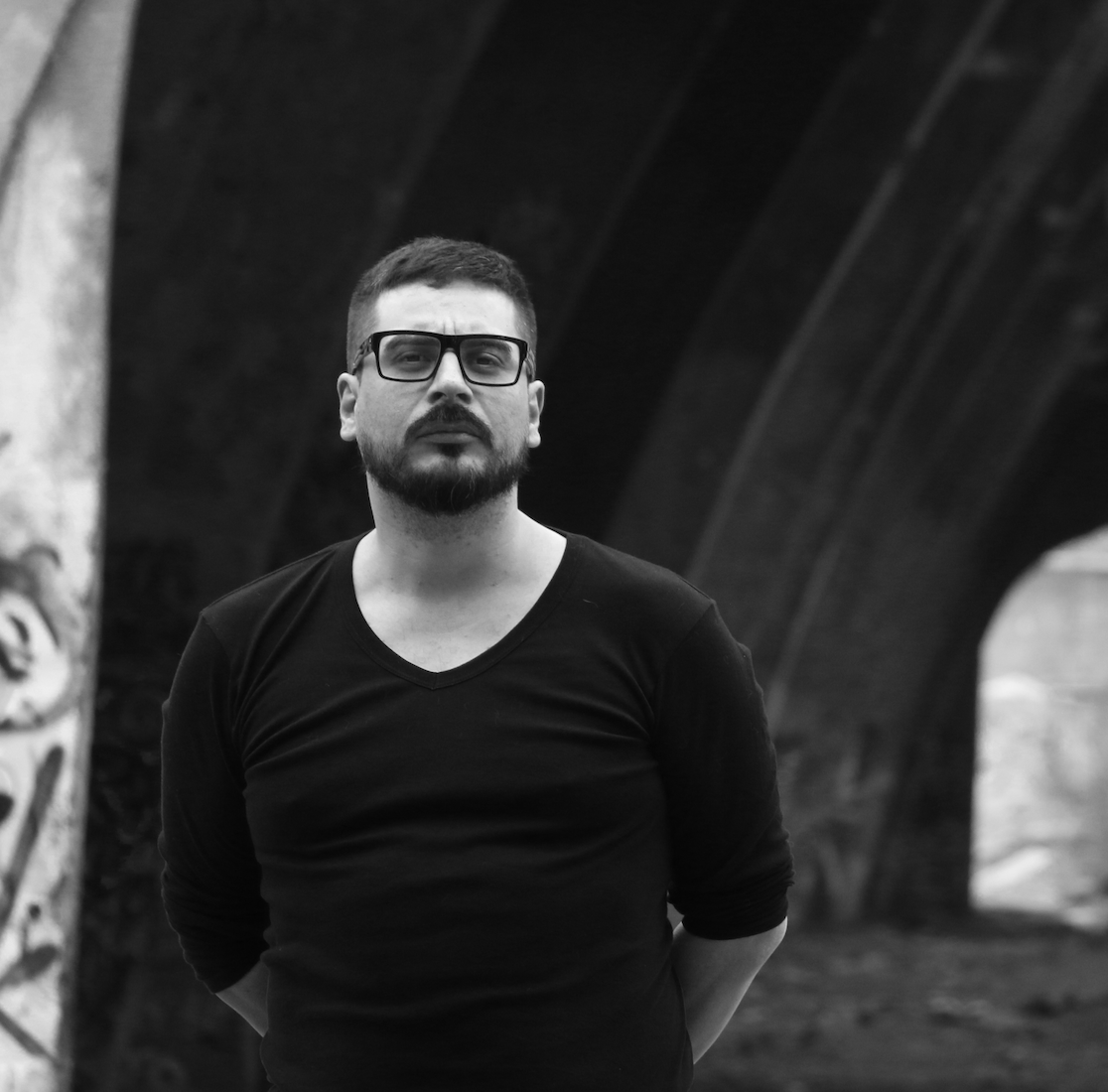
Cristian Cristino studied Dramatic Arts in Buenos Aires, Argentina, and upon returning to Chile he trained as a playwright with teachers such as Mauricio Barría, Marco Antonio de la Parra, Juan Radrigán, and Carla Zúñiga, among others. He won the first Mago Editores Playwriting Prize in 2010 with his play Devórame otra vez. He is currently studying Philosophy at the Universidad de Chile. He has given talks on philosophy, literature, and theater at Universidad Diego Portales, Universidad de Buenos Aires, LASA (Canada), Universidad Adolfo Ibáñez, and Universidad de Cuyo, among others. He has taught playwriting workshops for the Teatralízate platform in an online format.
Among his plays are Yucatán, premiered at the Museum of Memory and Human Rights, and Lucecitas en el cielo, premiered at Teatro del Puente (regional Fondart 2019). He has also developed narrative writing. In 2021 he published El fallo muscular, his first novel, with Noctámbula press. He was selected to be part of the short story anthologies Descarnados (Ignición Editorial) and 10 voces (Sietch Ediciones). He was invited to participate in the second issue of Imagi magazine (Imaginistas) and in the anthology Reflujo, antología del cuento delirante (Emergencia Narrativa). He contributes texts to the digital outlet Toda la Cultura.
Together with Cristian Leonidas, he leads the reader-mediation project “Leo Compartiendo,” which runs reading clubs and creative writing workshops based on themes related to Memory and Human Rights. His play María Estuardo viene por mí won the I Dramaturgy Contest Escenas En Contexto in the Short Plays category, was published in 2023 by Tridente Editorial, and was later presented as a staged reading in Barcelona, Spain. His play Tania Salón de Belleza was selected for the Encuentro Teatral En Breve of the Theater School at Universidad Finis Terrae and premiered in January 2024 at Teatro Sidarte.
In 2022 he was awarded a literary creation grant (Fondo del Libro y la Lectura) for the development of the poetry collection Los Retornados (Imaginistas), which received first prize in the Caudal Poetry Award (Caudal Book Festival, Valdivia).