
A medical student obsessed with being the best goes to a bar after a grueling ER shift where she watched doctors save a nearly decapitated man. Sleep-deprived and collapsing, she crosses a frozen, hostile city trying to get home, but instead drifts back to the hospital, the only place that feels like hers. On the edge of delirium, haunted by childhood memories of failed resuscitation, she decides she must save the patient herself, pushing her exhausted body and faith in “never letting anyone die” to a brutal, catastrophic extreme.
Nº 03 | Short story | Horror | 2691 words | Spanish version | Translated by Trinidad Montalva
ONLY NEEDS A PLACE
MACARENA ARAYA LIRA
They’re in a bar. They drink beer, eat chips, talk nonstop. Reggaeton is playing in the background and it’s hot—although only on the inside. Outside, it’s freezing. She doesn’t speak, but just observes what’s happening around her. The others, all of them, shout over the music, trying to make conversation. It seems all those university students, brimming with life, are having a great time. All but her. She looks uncomfortable, but above all, she looks tired. She doesn’t usually accept these kinds of invitations; her goal is to be the best, to get the best grades. Bars and parties distract her from the path she’s chosen, but they insisted so eagerly that, in the end, she agreed. She’s tired and hungry. She’s slept very little and eaten very poorly. The last few years of her life have been like this. All she really wants is a place to rest. Her eyes itch, and her back aches. Her body responds slowly, as if a heavy animal, a hibernating bear, had gotten inside it.
She was particularly tired because the night before she’d done a volunteer shift at the emergency room and hadn’t had time to go home and sleep. At the end of it, several people had been brought in from a highway accident. A truck loaded with lumber had collided with several cars. The huge trunks were ejected from the truck and decapitated almost all the occupants of the family in the car in front. Three dead. A woman and two children, decapitated. The only one who hadn’t died was the father. One of the ejected pieces had taken a significant part of the right side of his head, leaving a huge hole, but he had survived. Two of the best emergency room doctors in the hospital treated him. She was able to observe, up close, the work of her future colleagues. How beautiful those hands were, moving swiftly through the blood, those needles entering the skin, those gauze pads cleaning away the secretions. She admired those men; she wanted to be like them. Since she was a little girl, she had dreamed of being a doctor. They managed to stabilize the patient and took him to the operating room, but everyone agreed that it was very likely he would die in the next few hours.
She went to shower before class. Under the running water, she thought about something her mother often told her: in some cases, keeping someone alive is an act of profound cruelty. She couldn’t disagree more. The patient had to be kept alive, no matter what. For her, keeping someone alive was never cruel, regardless of the patient’s condition; that’s what science was for. For her, a dead patient was a failure, always. Before going to class, around eight in the morning, she went to check on him one last time. His vital signs looked stable; she became convinced that the man would survive.
At the bar, they’re all celebrating a classmate’s acceptance for an internship abroad. She scolds herself again for agreeing to this invitation: «How could you! You shouldn’t be here.» She must have gone about 28 hours without sleep: classes, shift, classes. She’s convinced herself it’s okay not to sleep because doctors sleep very little and very poorly. If she wants to be the best, she has to get used to sleeping little and poorly. She shouldn’t be here, what the hell is she doing in that bar, with those people? Her head is starting to hurt terribly, as if a needle is being driven into the back of her neck. She’s going to get up and leave, any minute now, as soon as her back pain eases up. She has a test tomorrow; she needs to go home and review. «None of them work as many hours as I do,» she thinks. She’s not interested in these people, these conversations; the only thing that really matters to her is having the best GPA, topping the rankings, keeping her scholarship, and then getting another one to go abroad. Being the best. That’s how she plans to get out. She’s not going to the best university; her score wasn’t high enough, so she knows she has to work twice as hard, do more shifts in the ER, take seminars, attend supplemental classes, be a teaching assistant. She has to do it all. Only then can she become number one.
She’s going to beat them all.
Her legs have gone numb. She pinches her thighs under the table and feels nothing. She’s pushed her body to its limit, and it’s not responding the same way as before. She needs to stop, but if she stops, her project (herself) won’t work, and she doesn’t like it when things don’t work. What are all these people saying? Why are they talking so much? She wonders. They’re looking at her. Did she say that out loud? Is she that clumsy? If only she could sleep for a couple of hours, maybe then she could understand what these people are saying, maybe then she could actually talk to them, maybe even… tell a joke. She raises a glass of beer to her lips, thinking maybe that will cheer her up a bit, but she can’t swallow. The liquid runs down her neck and stains her jacket. Indeed, she is that clumsy. She takes a napkin and, with what little energy she has left, wipes herself. She’s going to close her eyes for a moment, just a few seconds, so she can regain her energy and leave. In the background, a choir of laughter, the smell of sweaty bodies, a twinkling light, all seem to cuddle her.
And she sees him. Or rather, she sees him again. The father, whose head was severed by the wood, is standing at the bar, intubated. The man puts his hand to his head; it’s clear the wound hurts. «Do you need help?» she asks him. «Damn, it’s midnight!» one of the group shouts. The subway’s closed. She wakes up. She dozed off for a few seconds, or minutes, she doesn’t know for sure. Her shirt is covered in drool. The patient isn’t here, of course not, she tells herself. «I shouldn’t be here.»
The only way home now is by bus, cab, or a shared taxi. But it’s late and dangerous to be out at this hour. One of them offers his apartment to continue the celebration; it’s nearby, and there’s a liquor store on the corner. They can stay the night if they want, he suggests. She doesn’t want to, of course not! She likes waking up in the middle of the night and knowing exactly where she is; she doesn’t like the unknown. Besides, she needs to study, review, make summaries. She thinks it’s not that late yet, not that dangerous, that buses are still running. They all agree to continue the celebration at their friend’s place. They insist, come on, let’s go, we’ll have a good time. But she says she’d rather leave. They’re not as committed as I am, their legs don’t go numb, she thinks. The scholarship. Being the best. Topping the rankings. Not failing. Bye, see you in class, she tells them. And she leaves the bar. The thick, cold fog hits her face. The frozen city smells of burning tires. The heat of the bar is behind her.
She arrives at the bus stop. The main avenue is empty; no cars are passing by; nothing is passing by. She was sure several buses would be going by at this hour; she was convinced there would be much more activity in the streets. In the distance, on the median, there are small bonfires everywhere. There’s a foul smell coming from those fires; burning trash is the only way for people living on the streets to feel warm. She shivers; it’s freezing cold. She doesn’t sit on the bus stop because she knows that if she does, she’ll fall asleep. And although it’s very difficult for her to stay on her feet, she keeps standing. She thinks the best thing to do is to take a taxi because, even though she doesn’t have much money, at least it can get her closer to her destination. But no taxis are passing by, and she can’t call one either because when she checks her cell phone, she realizes it’s dead. Something will go by, she says to herself, blowing a puff of cold breath into the night.
When she was a child, she had a cat. One morning, as she opened the gate to go to school, she found the animal dead at her feet. It was just lying there; its eyes open and its mouth covered in blood. She froze, seeing her little pet like that. After a few seconds, she picked it up and brought it inside. She was alone; her parents were already at work. She tried to revive it, pressing on its chest and giving it mouth-to-mouth resuscitation. She had seen on TV that this was how dead people could breathe again. While doing so, she kept repeating, «I’m going to save you, I’m going to save you.» She continued for a long time, until she grew tired and understood that the animal would remain that way forever. When her parents returned home, they found a little girl with blood on her mouth, sleeping next to a dead cat.
What happened to the children’s bodies? How fast was the wood ejected? As she asks herself these questions, she drools, struggling to keep her mouth closed. In the distance, she hears the crackling of burning wood, the melody of combustion. The thought of fire comforts her, though in reality she shivers, staggers, and drools all over the asphalt of a freezing city where no cars are passing by. She can’t take it anymore; the pain in her heels is unbearable. She sits down to wait. She slaps herself across the face to stay awake, hitting herself hard, leaving three finger marks on her cheek. She tries to review the material for tomorrow’s test, but she can’t; she doesn’t even remember which subject it’s for. Maybe it’s better to read, maybe it’s better to take her notebook out of her backpack and review her notes. She trembles, sways, drools, snot running down her face, needles piercing through her heels, barely holding up her back. It’s as if her body is turning against her. She needs to sleep. Not a single car, not a single bus, nothing, no one. She doesn’t like it. Nobody likes a silent city. The city has to have noise, she says aloud to the void, and finally, overcome by exhaustion, she goes forward. She hits her face against the cement, leaving a drop of blood. She gets up with difficulty, and, as her lip starts to swell, she starts to cry. She slaps herself again; she needs to wake up. She has to think of something. She stretches out her hands and looks at them, looks at her nails, her palms; she loves her hands, they are her tools, her future. She remembers the doctors’ hands on the blood. And she finally understands what she has to do. She is going to the hospital. It’s her home. It’s about seven kilometers walking. And although it feels like a lot, she immediately gets up and sets off into the night.
She walks along the median. Somehow, her feet don’t feel like her feet, but rather like blocks of horribly heavy cement. Her back feels like a line of fire, burning her with every step. There are so many dogs, so many thin, sick dogs. She’s exhausted, and her vision is blurry; she can’t focus. The dogs’ faces look distorted, like masks with slanted eyes and multiple mouths. The animals’ noises mingle with the moans and voices of the people living in tents, on cardboard, on mattresses. This is hell, she says. It’s freezing cold, and people are groaning, crying, screaming. She hears a frightening whisper, as if everyone were trying to tell her something, as if they were asking for her help. She’d never walked along the median at this hour and had never imagined so many people lived there. She’d like to help them; if they were sick, she’d like to operate on them and give them medicine, she’d like to use her hands on their bodies, but now she can’t do anything for them. «Leave me alone,» she mumbles. And, like the soft choir around her, she also starts to cry. She stumbles, falls a couple of times. She can’t see, everything is blurry. A thought enters her head: «I wish I could get into one of those tents and sleep there.» But then she immediately imagines men hiding in those tents; scary men biting on bony dogs. She’s sure they’re talking to her; she’s sure that at any moment everyone—dogs, men, women, everything living there—is going to turn on her. She starts to run. She still has the energy to escape.
She manages to get to the hospital; it’s clearly a quiet night there. She exchanges a few glances with the guards and some nurses who look at her strangely, probably because she looks exhausted, dirty, has a swollen lip, and limps. But they don’t say anything; they just let her in. After all, they’ve seen her come in so many times before, perhaps too many times. In fact, those nurses think she shouldn’t be going there so often. They secretly wish they were her age and could be anywhere but there. She, on the other hand, is happy to be there. At last, she’s going to rest, at last, she’s going to sleep for a couple of hours. That’s all she needs. She, a future doctor, number one in the rankings to date, is content with a couple of hours; she knows that with three hours of sleep she can still be the best. But she can’t go to rest without first checking on the man. Is he still alive? she wonders. And, dragging her feet, goes to see the patient.
She reaches the room, but can barely focus; she can only distinguish a huge tangle of tubes connected to the machines keeping him alive. The twinkling lights are all she can see clearly. Everything is hazy, her body aches so much, she’s never felt so much pain before. She’s so tired she can’t quite read the man’s vital signs. It’s as if she’s forgotten everything, she doesn’t remember anything she’s learned during those three years of medical school, she doesn’t even quite remember where she was before staring at that machine. Does she know who she is? Or has she forgotten that too? She gets closer and looks at the man. She notices his eyes are slightly open. They look red, swollen with blood. «Are you alive?» she asks. But of course, he doesn’t answer. She staggers back and forth, drooling, and keeps staring at him. She slaps herself; she can’t quite grasp what’s happening. «Are you dying?» she asks. She starts to cry, snot running down her dirty face. «You can’t die, you can’t die.» «Do you need my help?» she asks.
Then, she climbs onto the stretcher. «I can help you, I’m the best, I’m better than everyone.» Apparently, she remembers who she is. She gets on top of the man and starts pressing on his chest, doing CPR. She presses and presses and presses again, hard. Where she gets that energy, it’s impossible to know, but she keeps going, and presses so hard that the patient’s body cracks. «I’m going to save you, I’m going to save you.» She removes the endotracheal tube to give him mouth-to-mouth resuscitation; the man’s blood starts gushing out of his mouth. She chokes, but she doesn’t stop, she can continue without problems, she’s going to save that man, she’s the best, she’s doing what the best would do, the best wouldn’t let a patient die, never, of course not.
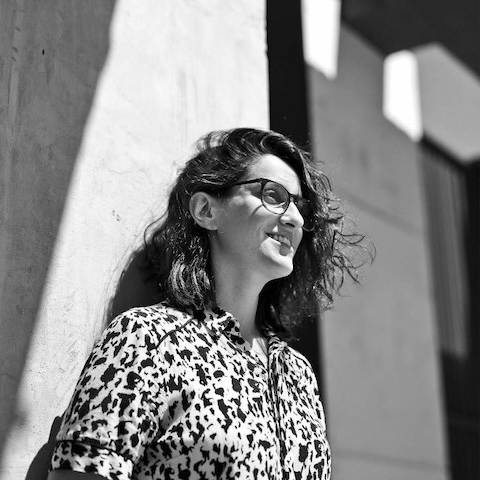
Macarena Araya Lira studied Theater and holds a Master’s degree in Film and Television Screenwriting from the University of Barcelona. In 2017 she won the short story contest of Paula magazine and the flash fiction competition “Santiago en 100 Palabras.” In 2019 she won the 19th National Playwriting Showcase with the text “Dame un minuto, esto va a ser breve” (“Give Me a Minute, This Will Be Brief”). That same year she published Paisajes (No habrá muerte. Aquí terminará el cuento), her first book. In 2021 she received the Literary Creation Grant in the Novel category from the Ministry of Culture, Arts and Heritage, and in 2024 the Audiovisual Fund for the development of the feature film La Susurradora (“The Whisperer”). She is also the playwright of Las Chicas de la Plaza (“The Girls from the Square”), selected for the “Teatro En Breve” Festival.